
Sarah Palmieri - "Testing Relationships Between Male Plumage, Song, and Genetic Ancestry in the Passerina Bunting Hybrid Zone"
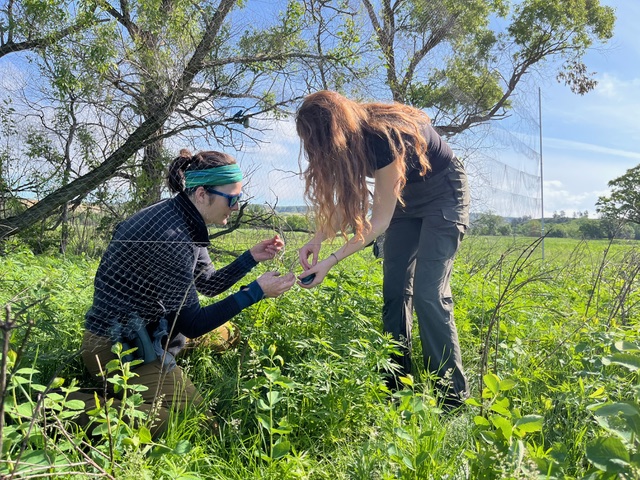
"Thanks to the generous funding from the Biodiversity Institute, I can provide two undergraduates with paid field technician positions to help conduct my research this summer. This opportunity will give them critical experience in executing ornithological research methods, using specialized scientific equipment, and gaining real-time insight into the research process. I aim to enrich my undergraduate technicians’ educational experiences at the University of Wyoming, provide them with a fun and educational summer, and offer them a unique job experience that enhances both their resumes and their personal passions for science."
Sarah Palmieri, UW Masters Student
2026 Recipient of Biodiversity Institute Graduate Student Excellence Grant
Department of Zoology and Physiology
Advisor: Matt Carling
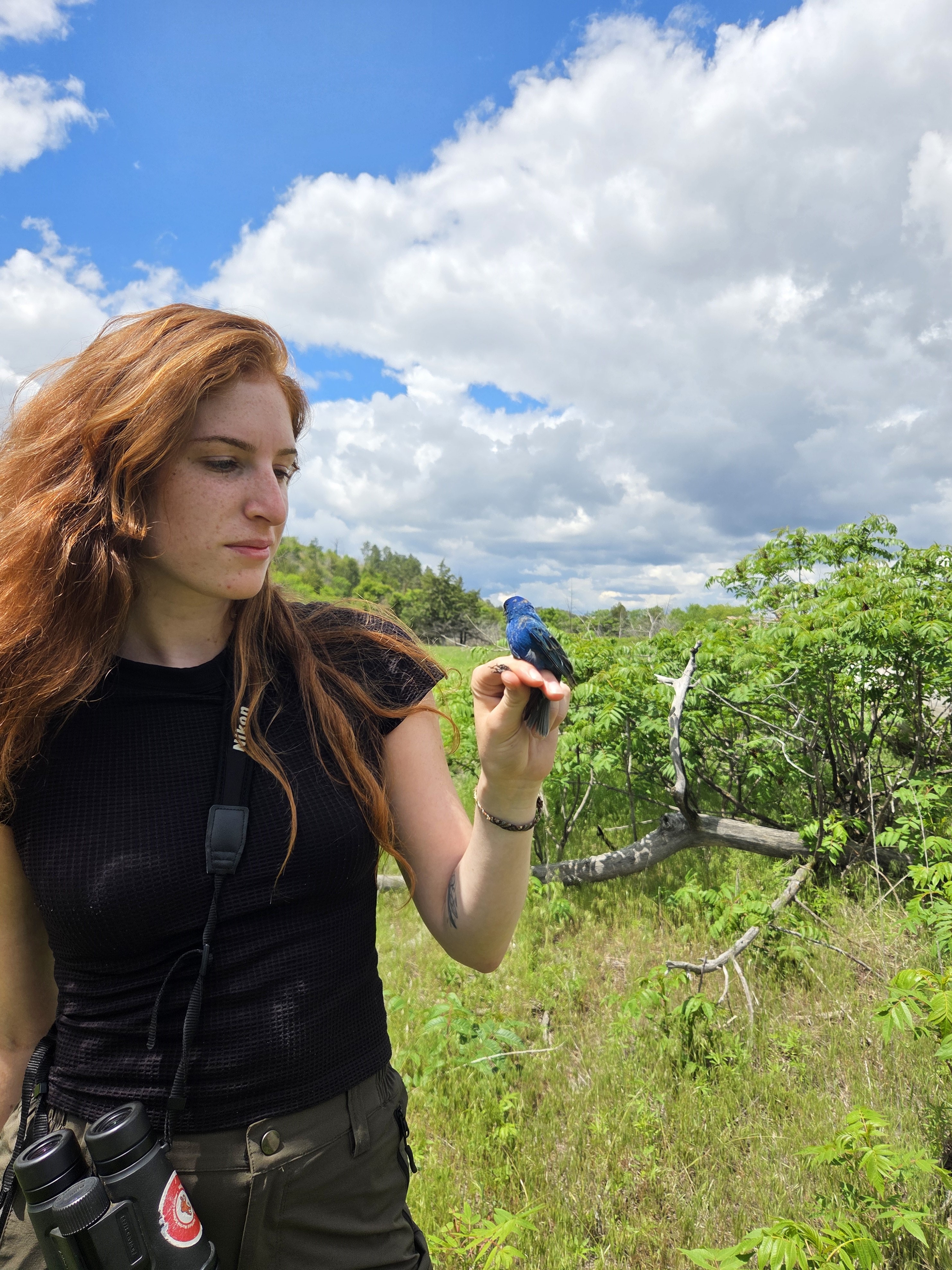
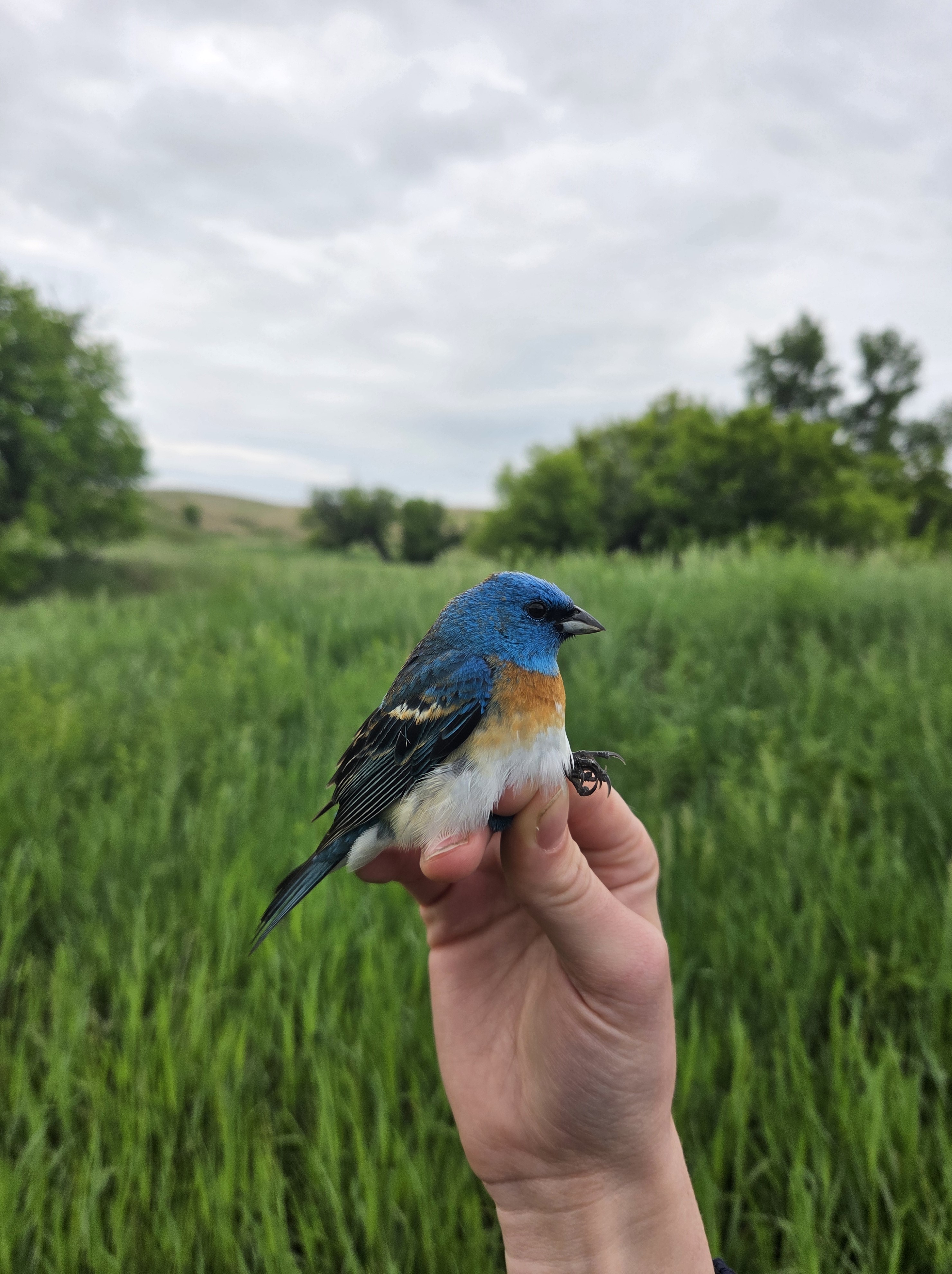
Hybrid zones are powerful models for studying the processes that drive evolution, such as female mate choice, selection, and reproductive isolation. However, the complex underlying dynamics driving these forces are overall poorly understood. This is particularly true in areas where species interactions, range limits, and phenology are rapidly shifting as organisms struggle to keep pace with unprecedented rates of environmental change. A notable example of this trend exists through the Indigo Bunting (Passerina cyanea) and the Lazuli Bunting (Passerina amoena), which hybridize across the Great Plains Suture Zone. Although past work has documented rapid westward shifts of this hybrid zone in recent decades, driven by anthropogenic landscape and climate change, little is known about the patterns of variation in traits important to female mate choice across the contact zone in the context of this shift.
This work aims to identify correlations between phenotypic traits important to reproductive isolation, specifically song and male plumage, and their relationships to genetic ancestry in Passerina males across the contact zone. Given these objectives, we predict a strong relationship between male plumage and genetic ancestry, and no relationship between song and genetic ancestry. By identifying and quantifying these relationships, we can improve our understanding of how these factors contribute to reproductive isolation between the species and how hybridization dynamics will evolve in the face of continued environmental change.
Share This Page
Research Highlights